


According to studies, an average US citizen reads about 12 books annually. Did you know that many readers visit an author’s website to learn more about them and their books? Yet, many indie authors miss the mark when it comes to their author website design, losing potential fans and sales. The truth is, your website is more than just a digital business card — it’s your primary tool for building a connection with readers, promoting your work, and growing your platform.
Feeling overwhelmed about where to start? You’re not alone. Let’s tackle this step by step so you can create an author website that captivates your audience and supports your career.
Why Every Indie Author Needs a Website
Social media platforms are essential, but they’re not enough. Algorithms change, trends fade, and platforms can disappear. Your website, on the other hand, is a permanent home for your brand and work. It gives you control, credibility, and a direct channel to your readers.
However, not all websites are created equal. A successful author website design includes specific features that make it easier for readers to find, follow, and support you. Let’s break those down.
1. Compelling Author Bio
Readers want to know the person behind the books. An engaging, well-written author bio helps you establish a connection.
What to Include: Your background, writing journey, and inspiration. Keep it professional but let your personality shine.
Pro Tip: Use a friendly headshot to make the page feel approachable. Avoid blurry or overly casual photos.
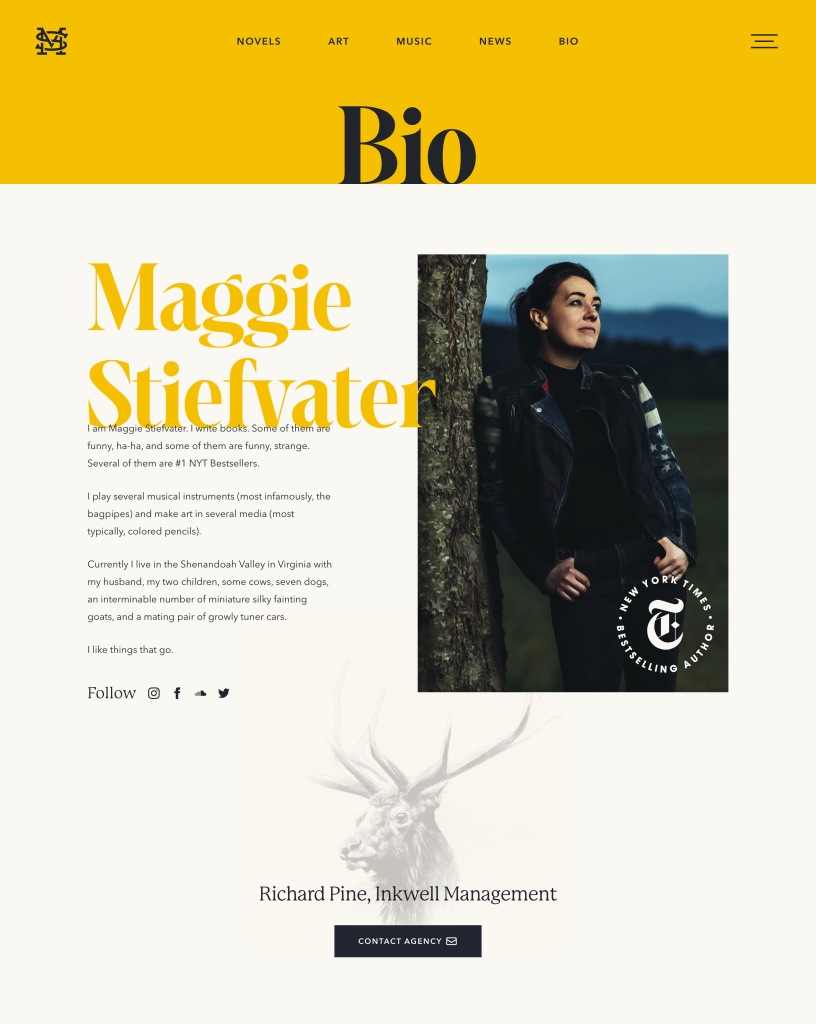
Example: Below is the bio of Maggie Stiefvater. As you can see, this is very minimalist and clean design. She uses a unique approach combining her artistic background with writing
2. Dedicated Book Pages
Your books are the stars of the show. Each one deserves its own page with the following elements:
- Cover Image: High-quality visuals to grab attention.
- Blurb: A concise, intriguing summary.
- Purchase Links: Make it easy for readers to buy with direct links to Amazon, Kobo, or other platforms.
- Bonus Content: Include excerpts, book trailers, or reader reviews.
Why It Matters:
Organized book pages reduce friction for potential buyers, boosting your sales.
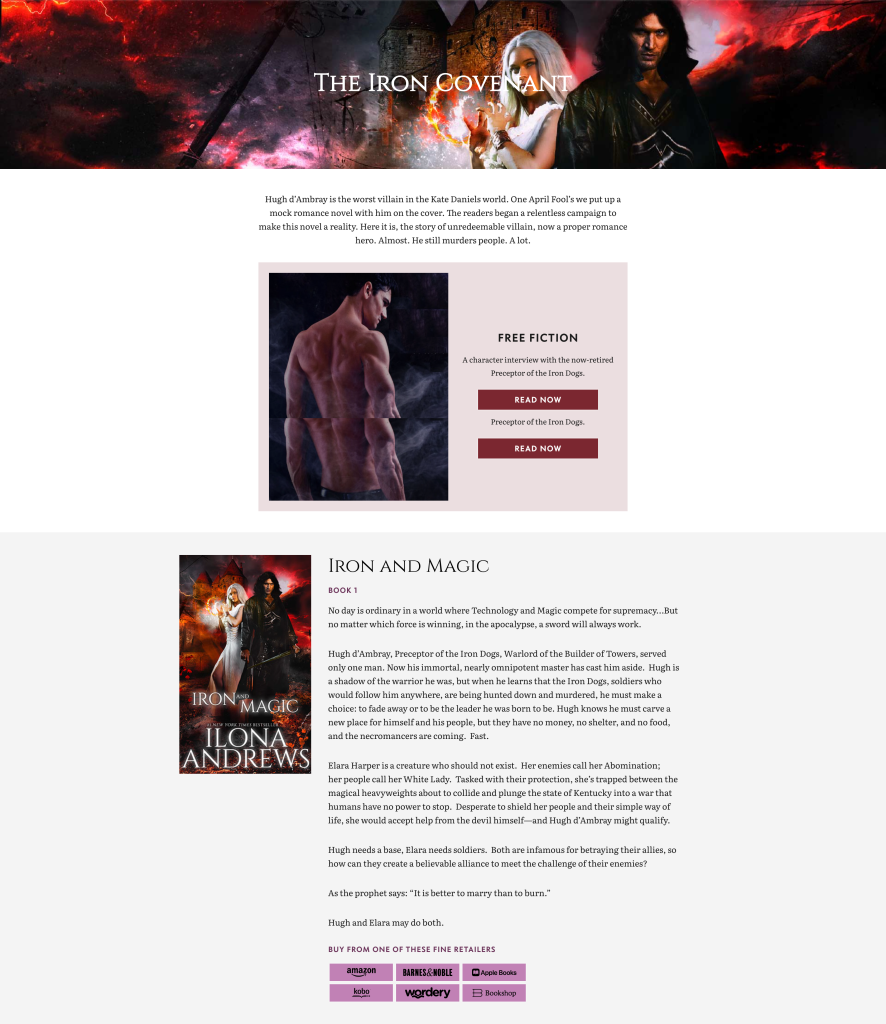
Example below is Ilona Andrews website. The main book page, as well as the individual book pages are an excellent example of series organization and reading orders layout.
3. Blog for Reader Engagement
Adding a blog to your author’s website design is a fantastic way to keep readers engaged between book releases. Share updates, behind-the-scenes looks, or even short stories.
Tips for Success:
- Post consistently (even once a month works).
- Keep your tone conversational and reader-focused.
Ideas for Posts:
- Updates on your writing process.
- Favorite books or authors that inspire you.
- Answer reader questions or share writing tips.
What makes a blog successful isn’t just consistency – it’s personality. Take Whatever.scalzi.com as an example: the blog succeeds because it feels like having a conversation with a friend who happens to be an author. The posts range from writing updates to thoughts on current events, all tied together with a distinct voice that keeps readers coming back.
4. Email Signup Form
An email list is one of the most valuable tools for indie authors. Why? Because it’s a direct line to your readers, free from algorithm interference.
What to Offer:
- A free chapter, short story, or other exclusive content is an incentive for signing up.
- Regular updates about book launches, events, and promotions.
Placement Tips:
Include the form on your homepage, about page, and blog posts.
Example:
“Love exclusive content? Sign up for my newsletter and get a free short story from my fantasy universe!”
5. Social Media Integration
Make it easy for readers to connect with you on social media. Add buttons linking to your profiles and embed live feeds for platforms like Twitter or Instagram.
Why It’s Important:
Fans often want to interact with you on multiple channels, and this helps build a sense of community.
Placement Suggestions:
- Footer or sidebar of your website.
- Below blog posts or book pages.
6. Reader Testimonials and Reviews
Social proof is powerful. Include glowing reviews or testimonials from readers to encourage others to pick up your work.
Where to Display:
- Book pages.
- Homepage as a scrolling feature.
Pro Tip: Use excerpts from Amazon reviews or Goodreads with permission.
7. Media Kit for Promotion
If you’re pitching to bloggers, podcasters, or journalists, a downloadable media kit makes their job easier. Include:
- Your author bio.
- High-resolution photos.
- Book covers and summaries.
- Contact information.
This feature positions you as a professional and simplifies the process of promoting your work.
8. Events and Updates Section
Planning a virtual book signing or attending a literary festival? Use your author’s website design to keep readers in the loop.
Content Ideas:
- Upcoming events.
- Book release countdowns.
- Links to virtual meetups or live streams.
9. Mobile-Friendly Design
More than 55% of web traffic comes from mobile devices. If your website isn’t optimized for smaller screens, you’re losing readers.
Key Features:
- Responsive layouts.
- Easy-to-read text.
- Large, clickable buttons.
Pro Tip: Test your website on multiple devices before launch. Don’t forget to include tablet for those kindle readers!
How to Get Started with Your Author Website Design
Building or revamping your website may sound daunting, but it’s worth the effort. Start with the essentials, focus on simplicity and functionality, and expand as your audience grows.
If you’re not tech-savvy, consider hiring a professional to handle the setup while you focus on writing. Many affordable services cater specifically to indie authors.
Enjoy Expert Author’s Website Design Services From SĒDR STUDIO
Ready to build a website that captures your unique author brand and connects with readers? At SĒDR STUDIO, we specialize in creating sleek, functional author website designs that help you showcase your work, grow your audience, and boost your sales.
Let us help you create a site that not only looks great but also serves as a powerful tool for your writing career. Check out our portfolio. Contact us today, and let’s bring your vision to life!


0 Comments